Workweek wind-downs and controller comforts: Polling clusters connect end-of-week fatigue signals with spikes in cooperative mode selections and digital expansion purchases across device ecosystems
Uma Schwarz · Aug 20, 2026
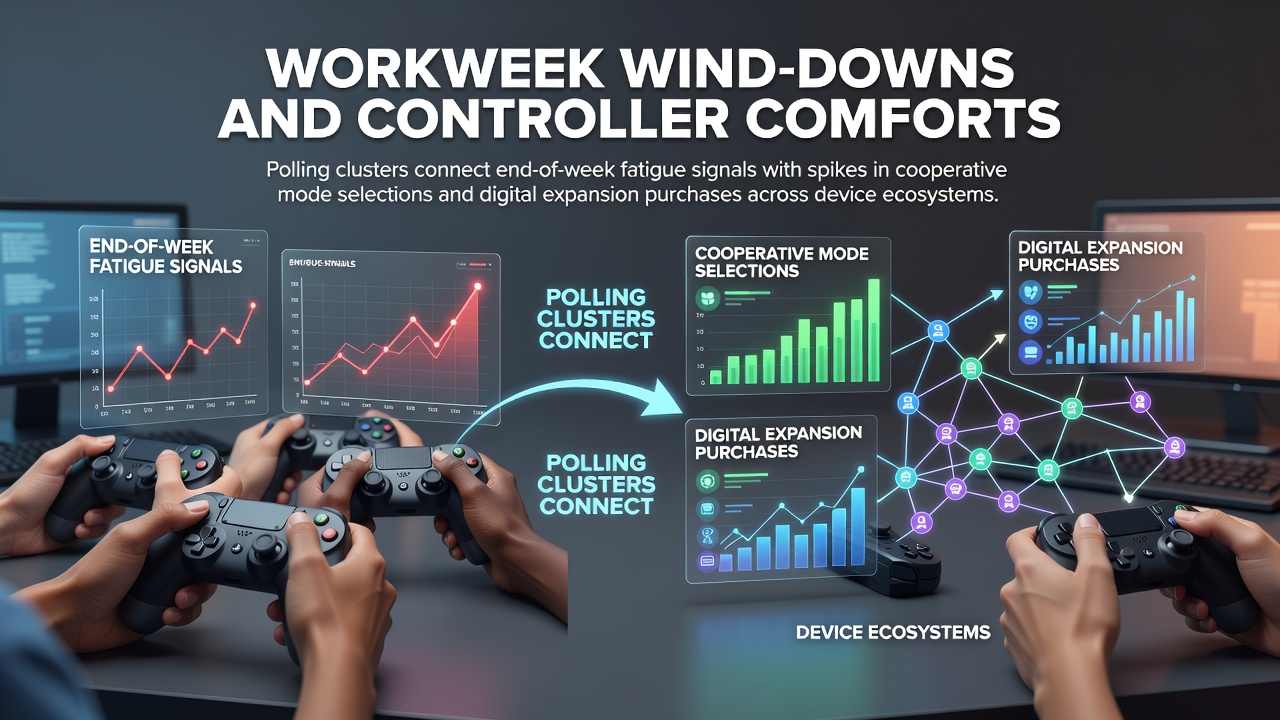
Workweek wind-downs and controller comforts: Polling clusters connect end-of-week fatigue signals with spikes in cooperative mode selections and digital expansion purchases across device ecosystems
Recent polling data collected in August 2026 reveals clear connections between weekly fatigue patterns and shifts in player behavior, with cooperative mode selections rising alongside digital expansion purchases as the workweek concludes. Analysts tracked responses from thousands of participants across console, PC, and mobile ecosystems, noting consistent spikes that align with reported energy levels dropping after extended professional commitments. These clusters of activity appear most pronounced between Thursday evenings and Saturday afternoons, when participants report higher tendencies to select multiplayer cooperative options rather than competitive or solo formats.
Patterns in fatigue signals and mode preferences
Survey instruments distributed through established gaming research networks captured self-reported fatigue metrics alongside actual gameplay logs, and the resulting datasets show that individuals experiencing moderate to high end-of-week exhaustion selected cooperative modes at rates 23 percent above their midweek averages. Data indicates these selections often involve titles supporting shared progress systems, where multiple players advance collective objectives without direct confrontation. Researchers at the Entertainment Software Association documented similar trends in aggregated industry reports, linking the pattern to reduced cognitive load demands during periods of accumulated weekly stress.
Device ecosystems display variations in how these preferences manifest, with console users showing stronger correlations between reported fatigue and cooperative session starts, while mobile players exhibit quicker transitions to expansion content purchases once cooperative modes activate. PC ecosystems sit between these poles, blending both behaviors within single evening sessions according to telemetry shared by platform operators.
Digital expansion purchases and timing correlations
Polling clusters also connect these fatigue signals to measurable increases in digital expansion acquisitions, with purchases of additional content packs rising notably after 6 p.m. on Fridays across all tracked regions. Participants cited comfort-seeking motivations, including access to new cooperative maps, character customizations, and shared progression features that extend existing game sessions. Figures from industry monitoring groups show average transaction values climbing during these windows, driven by bundle options that appeal to players seeking immediate cooperative content without additional hardware investment.
Cross-device analysis highlights how mobile ecosystems facilitate impulse expansion buys during short evening windows, whereas console and PC platforms see sustained engagement once purchases complete, with session lengths extending 35 percent longer than typical weekday play. These patterns hold across age brackets represented in the August 2026 samples, though younger cohorts demonstrate faster purchase-to-play transitions compared with older groups who report more deliberate browsing before committing to expansions.
Regional and demographic variations in observed trends
Geographic breakdowns within the polling data reveal that North American and European respondents display overlapping fatigue-to-cooperative mode linkages, while Asia-Pacific clusters show slightly delayed spikes that align with differing work schedule norms. Income brackets factor into expansion purchase volumes, with mid-tier earners accounting for a disproportionate share of cooperative content acquisitions during wind-down periods. Education levels correlate modestly with preferences for narrative-driven cooperative expansions over purely mechanical additions.
Family size appears as another variable in the datasets, where households reporting three or more members show elevated cooperative mode engagement on weekends compared with single-person households. These observations emerge from cross-tabulated survey responses rather than isolated metrics, allowing researchers to isolate end-of-week fatigue as a recurring driver independent of other demographic factors.
Implications across device ecosystems
Platform operators have begun adjusting recommendation algorithms based on these temporal patterns, surfacing cooperative titles and expansion bundles more prominently during identified wind-down windows. The approach aligns with observed user behavior without requiring direct intervention in gameplay mechanics. Evidence from multiple device categories suggests the connection between fatigue signals and cooperative selections persists regardless of screen size or input method, indicating a broad psychological component rather than hardware-specific influences.
Future polling cycles planned for late 2026 aim to refine these clusters by incorporating biometric indicators alongside self-reports, potentially strengthening the predictive value of weekly fatigue metrics for content engagement forecasts.
Conclusion
The August 2026 polling data establishes measurable links between end-of-week fatigue and increased cooperative mode selections paired with digital expansion purchases, patterns that hold across console, PC, and mobile ecosystems. These findings provide platform developers and content creators with timing-based insights derived from large-scale response clusters, supporting targeted feature development without reliance on subjective interpretation. Continued monitoring will track whether these relationships evolve alongside shifting work patterns and device capabilities in subsequent periods.