Wired Worlds Unwrapped: Poll Insights Link Player Demographics to Genre Preferences and Online Purchase Behaviors
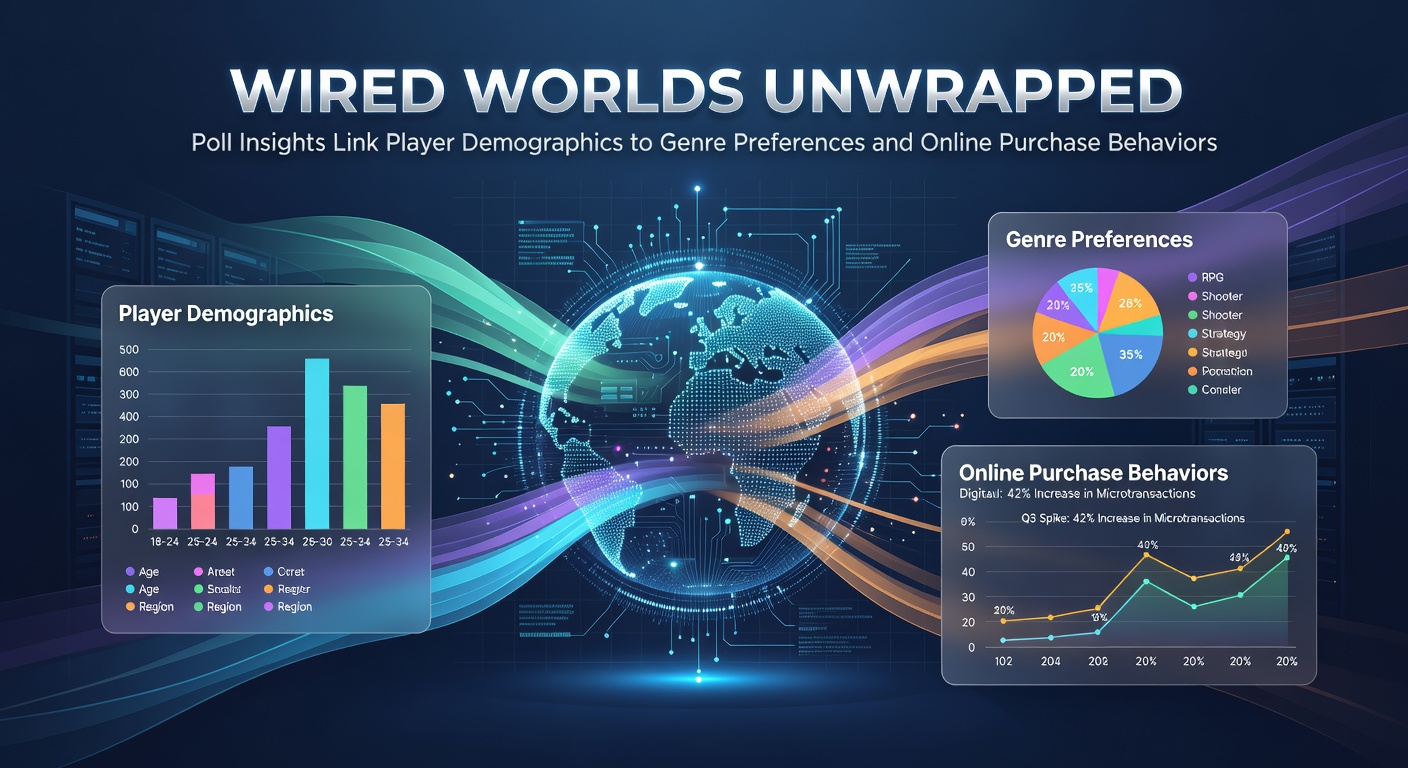
Recent polls conducted across multiple regions in May 2026 reveal clear connections between player demographics and both genre preferences plus online buying habits, with data drawn from thousands of respondents who participate in wired gaming communities worldwide. Researchers at various institutions tracked responses from North America, Europe, and Asia-Pacific zones, and the patterns show how age brackets, income levels, and geographic locations align with choices in action titles versus simulation experiences or battle royales. Figures indicate that younger cohorts gravitate toward fast-paced competitive modes while older groups lean into narrative-driven adventures, yet these trends also shape spending on downloadable content and subscription services in distinct ways.
One study released through industry networks highlights how household income directly influences subscription uptake, with higher earners committing more frequently to monthly passes that unlock exclusive modes and cosmetics. Data from these polls ties urban participants to heavier investment in multiplayer expansions, whereas rural respondents report steadier purchases of single-player campaigns that fit flexible schedules. Observers note the consistency across platforms, since wired environments allow seamless cross-device tracking of playtime and transaction records, which analysts then cross-reference against self-reported demographics for accuracy.
Demographic Patterns in Genre Selection
Breakdowns by age group demonstrate that players under 25 favor battle arena formats and extraction shooters at rates nearly double those of participants aged 35 and above, according to aggregated results compiled in early 2026. Meanwhile middle-aged respondents show stronger alignment with strategy and role-playing genres, often citing deeper customization options and longer campaign arcs as primary draws. Gender distributions add another layer, as polls find female-identifying players selecting cooperative survival titles more often than competitive shooters, while male-identifying groups split evenly between action and sports simulations depending on region.
Location data further refines these insights, since participants in densely populated areas report higher engagement with free-to-play battle passes that evolve through regular updates. In contrast, those in less connected zones prioritize one-time purchases of complete editions that avoid ongoing connectivity requirements. Researchers cross-tabulated these variables and discovered that education levels correlate with preferences for complex puzzle and management experiences, where strategic depth rewards repeated play sessions without requiring real-time social coordination.
Online Purchase Behaviors Tied to Player Profiles
Purchase records linked to demographic profiles illustrate that subscription renewals cluster around players with steady employment and access to high-speed connections, with May 2026 figures showing renewal rates climbing 12 percent among households earning above median income thresholds. Cosmetic microtransactions appear most frequently in accounts belonging to younger urban demographics, where social signaling through avatar customization drives repeat spending. Those same polls connect rural and lower-income groups to selective buying of expansion packs that extend offline-compatible content, reducing reliance on constant online features.
Industry reports from organizations such as the Entertainment Software Association confirm these spending clusters through anonymized transaction data matched against survey responses. Additional findings from Canadian research groups indicate that family-oriented households allocate budgets toward multiplayer bundles suitable for shared devices, whereas solo players invest in premium editions with early-access perks. The data also tracks seasonal spikes, with spring periods like May showing elevated activity around new season launches that align with school and work cycles.

Payment method preferences add nuance, as credit card usage dominates among higher-income brackets while digital wallet adoption rises among mobile-first younger users who favor quick in-app transactions. Polls reveal that loyalty programs tied to specific publishers encourage repeat buys across genres, particularly when rewards scale with playtime metrics collected through wired accounts. Experts have observed that these behaviors stabilize when platforms offer unified billing across consoles and PCs, reducing friction for cross-genre experimentation.
Regional Variations and Emerging Trends
European survey responses collected in May 2026 point to stronger preferences for indie narrative titles among participants in Nordic countries, where cultural emphasis on storytelling intersects with higher average education levels. Asian markets show elevated spending on gacha-style mechanics within role-playing genres, especially among urban professionals with disposable income for daily login rewards. North American data meanwhile links sports simulation fans to consistent season-pass purchases that mirror real-world league schedules, creating predictable revenue streams for publishers.
What's notable is the convergence around accessibility features, since polls indicate that players with reported disabilities across all demographics increase spending on titles offering robust customization and single-player options. Researchers at academic centers such as those affiliated with Australian interactive entertainment groups have mapped these trends against platform usage, revealing that wired PC setups correlate with broader genre sampling compared to dedicated console households that stick closer to established franchises.
Conclusion
Overall the May 2026 poll data underscores how demographic variables shape both the games people choose and the ways they spend within digital ecosystems. Patterns emerge clearly when analysts combine self-reported profiles with actual transaction logs, producing actionable insights for developers seeking to refine targeting and feature development. Continued tracking through wired communities promises further refinement of these connections as new titles launch and player bases evolve across global regions.