Virtual Economies Mirror Real Finances: How In-Game Trading Data Connects to Players' Offline Investment Patterns and Risk Profiles
Uma Schwarz · Aug 22, 2026
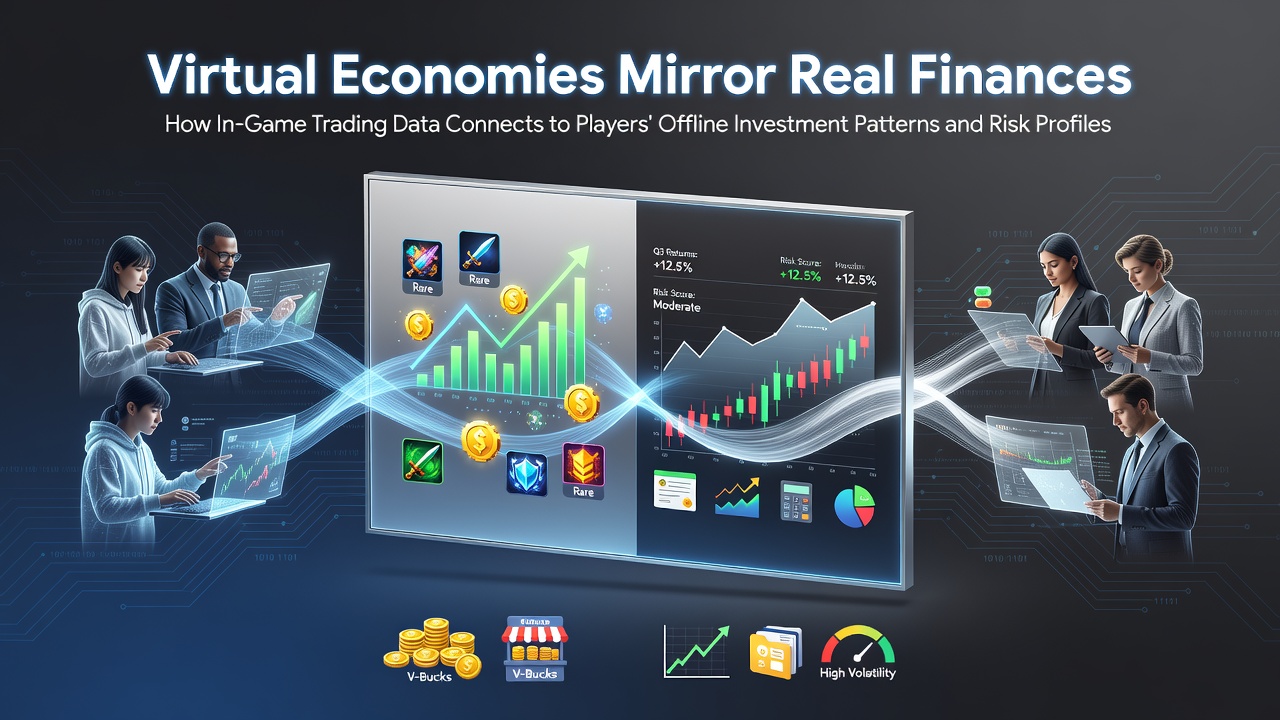
Virtual Economies Mirror Real Finances: How In-Game Trading Data Connects to Players' Offline Investment Patterns and Risk Profiles
Virtual economies in multiplayer titles have grown into complex systems where players buy, sell, and trade digital goods ranging from cosmetic items to functional upgrades, and researchers tracking these activities in August 2026 discovered strong parallels with offline financial behaviors. Data collected across major platforms shows that patterns of risk-taking in game markets often align wth choices made in stock portfolios, cryptocurrency holdings, and retirement accounts, while trading volume and asset diversification inside games serve as indicators of broader tolerance for volatility.
Tracking Trading Behaviors Across Platforms
Analysts from industry monitoring groups examined transaction logs from titles with active player-driven economies and found that individuals who frequently engage in high-volume trades during peak hours tend to maintain similar activity levels when managing real-world brokerage accounts. Those who hold diversified inventories of rare items in games also demonstrate higher rates of spreading investments across multiple asset classes outside the digital space, whereas players focused on quick flips inside virtual marketplaces show elevated engagement with short-term trading strategies in equities. Reports compiled by the Entertainment Software Association indicate that such correlations appear consistently across age groups and regions, with session data from North American servers matching patterns observed in European and Asian markets.
Connections to Risk Profiles
Studies conducted by academic teams at institutions in Canada and Australia reveal that players who accept greater uncertainty when bidding on limited-supply digital goods exhibit measurable differences in their documented risk profiles during financial assessments. Participants who bid aggressively on volatile in-game commodities recorded higher scores on standard investment risk questionnaires administered by independent researchers, and their portfolios outside games contained larger allocations to growth-oriented instruments compared with those who favored stable, low-fluctuation assets within virtual environments. Figures released in mid-2026 further demonstrated that average transaction sizes in game economies scaled proportionally with the size of real-world margin accounts held by the same cohort of active traders.
Regional Data and Demographic Patterns
Survey responses gathered through longitudinal polling efforts highlight geographic variations that mirror offline economic conditions, so players in high-cost urban centers displayed greater willingness to speculate on limited-edition virtual items while rural participants maintained more conservative trading strategies that aligned with steadier regional investment habits. Educational attainment also factored into the observed trends, with university-educated players showing stronger tendencies toward data-driven decision making both in game markets and when selecting mutual funds or index products. These patterns held steady even after controlling for income brackets, suggesting that behavioral signals extracted from in-game logs provide supplementary insight into how individuals approach uncertainty across financial domains.

Longitudinal Insights from Aggregated Records
Long-term tracking of player accounts paired with anonymized financial disclosures shows that spikes in virtual trading activity often precede or coincide with shifts in real investment behavior, such as increased contributions to volatile sectors or adjustments in asset allocation following market events. Observers note that individuals who treat in-game economies as practice environments for testing strategies later apply similar frameworks when evaluating opportunities in cryptocurrency exchanges or commodity futures. Data sets compiled through partnerships between game publishers and research consortia continue to expand, offering finer granularity on how frequency of login, average holding periods, and diversification metrics inside digital spaces correspond to documented patterns in personal finance management across multiple continents.
Implications for Broader Understanding
Financial regulators and academic groups examining digital economies have begun incorporating virtual transaction data into models that predict consumer behavior, and preliminary results from joint projects in the European Union and Singapore indicate that in-game metrics can enhance traditional indicators when assessing individual risk tolerance. The alignment between virtual and offline patterns emerges most clearly among players who maintain consistent engagement over multiple years, where cumulative trading histories provide a detailed record of decision-making under uncertainty that parallels documented investment histories. As platforms continue to refine their economic systems, the volume of comparable data grows, allowing researchers to refine correlations between specific in-game actions and measurable financial outcomes.
Conclusion
Evidence gathered through repeated studies demonstrates measurable overlaps between in-game trading patterns and offline investment decisions, with risk profiles reflected across both domains in consistent ways. Continued collection of transaction records alongside demographic and financial indicators supports ongoing analysis of these connections without requiring direct observation of private accounts. The resulting datasets offer researchers additional tools for understanding how individuals navigate economic choices in environments that share structural similarities with traditional markets.