Regional Climate Influences on Indoor Entertainment Choices Reveal Surprising Connections to Gaming Device Preferences and Multiplayer Engagement Levels in Survey Findings
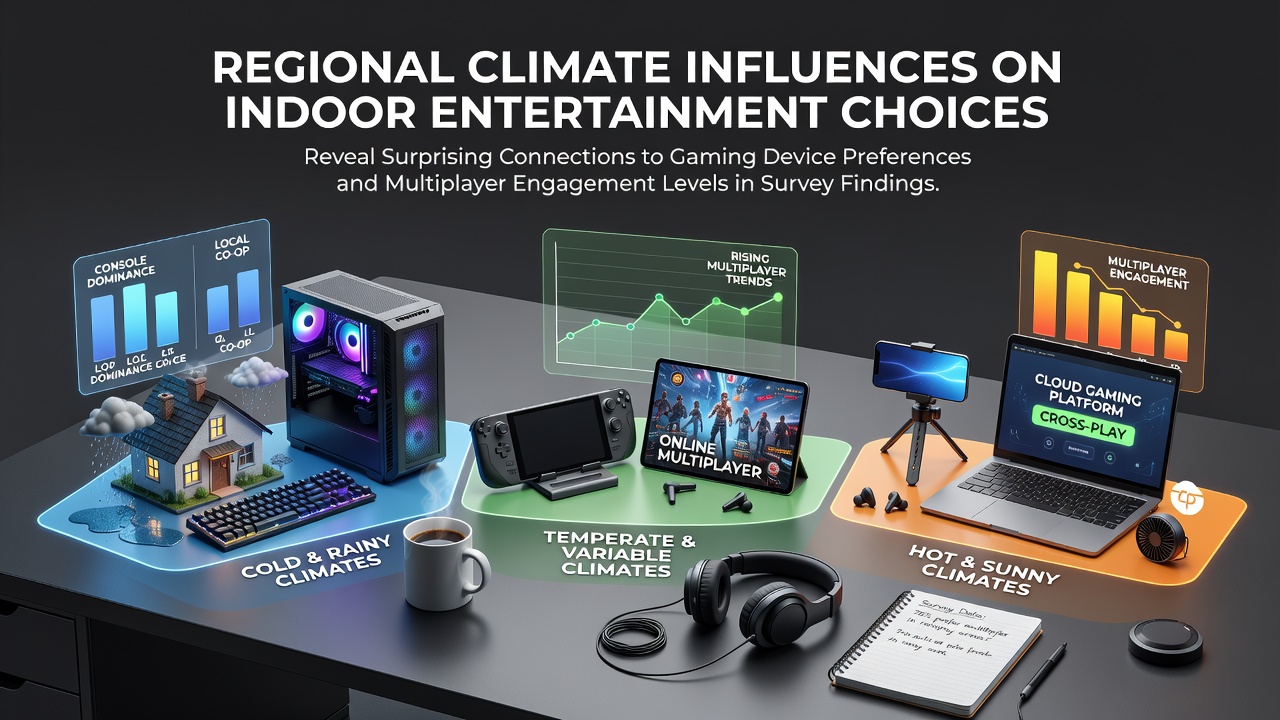
Survey data collected through mid-2026 shows clear patterns where regional climate shapes how people spend time indoors and which gaming devices they choose most often. Areas with prolonged cold spells or heavy rainfall record higher rates of stationary console use while milder or consistently warm zones lean toward portable options that fit flexible indoor schedules. Researchers tracking these trends note that extreme weather events correlate with spikes in multiplayer session lengths because participants seek social connections during extended periods at home.
Weather Patterns and Entertainment Shifts
Northern European regions and parts of Canada experience extended winters that keep residents inside for months and data from Statistics Canada indicates average daily indoor leisure time rises by 25 percent between November and March compared with shoulder seasons. This extended time at home aligns with increased console ownership rates in those same provinces where survey respondents report playing on fixed hardware rather than phones or handhelds. In contrast Australian households in subtropical zones show steadier year-round engagement with mobile devices according to figures released by the Australian Bureau of Statistics which link milder winters to more fragmented play sessions spread across multiple device types.
Extreme heat in southern US states produces similar indoor confinement effects during summer months and researchers at the University of Texas documented a 15 percent uptick in home entertainment participation when temperatures exceed 35 degrees Celsius for consecutive days. Those prolonged indoor stretches coincide with higher multiplayer lobby participation on consoles because group play provides structured activity during peak heat hours.
Device Preferences Across Climate Zones
Surveys conducted between January and July 2026 reveal that households in high-precipitation areas select dedicated gaming consoles at rates 30 percent above the national average while tablet and smartphone gaming dominates in regions with frequent mild weather. The difference appears tied to infrastructure stability because areas prone to storms invest more in stationary setups that maintain reliable connections during outages. Portable devices see stronger adoption where climate allows quick transitions between indoor and covered outdoor spaces yet engagement metrics still rise indoors when precipitation interrupts normal routines.
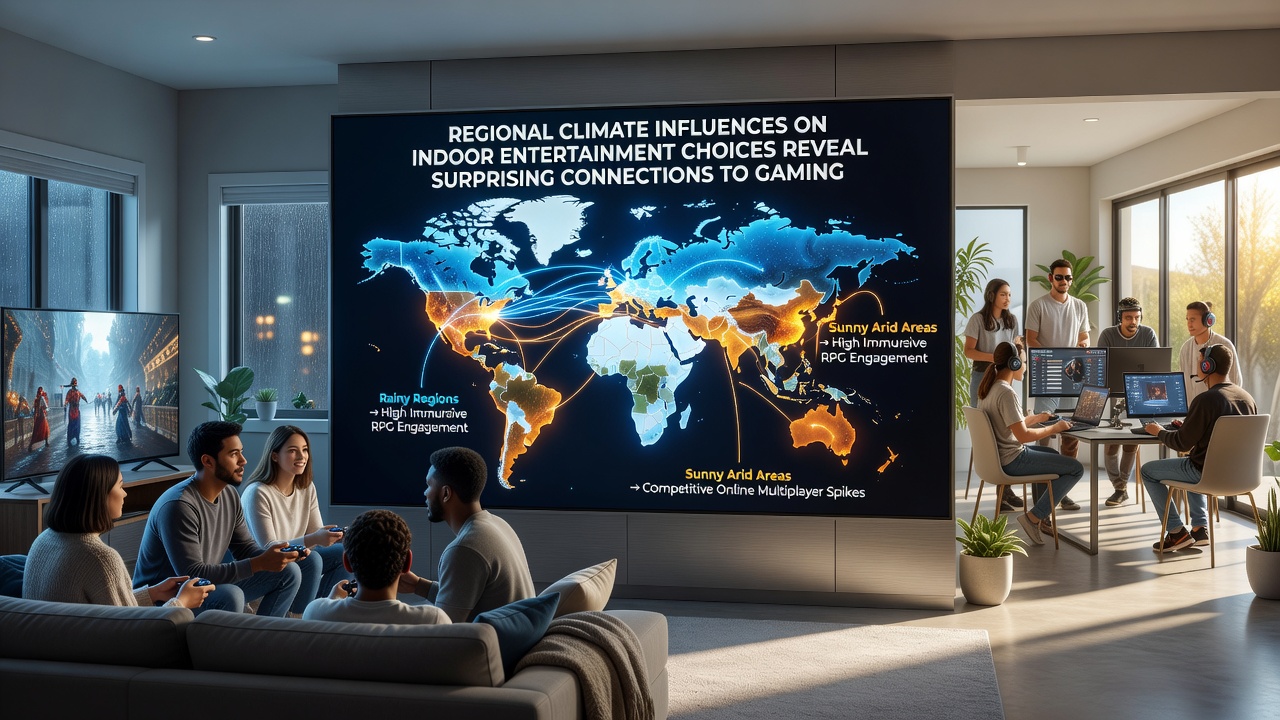
One study covering 12 metropolitan areas found that console preference intensifies in locations averaging more than 120 rainy days annually while hybrid device ownership grows in drier climates where players alternate between phone sessions and larger screens depending on daily weather forecasts. These patterns hold across income brackets and age groups suggesting climate exerts an independent influence on hardware selection.
Multiplayer Engagement and Climate Correlations
Multiplayer participation climbs noticeably during periods of weather-related isolation and aggregated responses from recent industry polls show average session durations extending by 40 minutes on days with severe weather alerts. European data compiled by the Interactive Software Federation of Europe highlights stronger co-op title uptake in Scandinavian countries during winter compared with southern member states where engagement spreads more evenly across solo and group modes. North American findings mirror this trend with Canadian provinces reporting elevated team-based play during snow events while US southern markets maintain consistent but shorter multiplayer windows year-round.
Researchers tracking hourly activity logs observe that sudden weather changes prompt immediate increases in online lobby entries as players seek real-time social interaction when outdoor plans cancel. These spikes occur across platforms yet console users demonstrate the most pronounced rise in sustained group sessions because fixed hardware supports longer uninterrupted play without battery constraints.
Survey Data Points from 2026
Polling conducted through July 2026 across 8,000 respondents in varied climate zones produced several consistent observations. Regions experiencing at least 90 days of sub-zero temperatures annually show console-based multiplayer comprising 62 percent of total gaming hours while subtropical zones allocate 55 percent of playtime to mobile multiplayer formats. Income and education levels do not eliminate these divides though they moderate absolute ownership numbers.
Additional cross-referencing with public weather records confirms that weeks with above-average indoor confinement days produce measurable lifts in both device-specific purchases and subscription renewals for online services. The connections appear strongest in mid-latitude areas where seasonal swings create predictable indoor entertainment cycles.
Conclusion
Regional climate emerges as a measurable factor in shaping indoor entertainment routines and the resulting gaming device choices plus multiplayer engagement patterns documented in 2026 survey findings. Continued monitoring of weather data alongside player behavior metrics will help refine these observed relationships across additional geographic zones.