Polls Reveal How Book Reading Habits Shape Narrative Game Purchases and Multiplayer Subscriptions Across Platforms
Ben Jenkins · Aug 27, 2026
Polls Reveal How Book Reading Habits Shape Narrative Game Purchases and Multiplayer Subscriptions Across Platforms
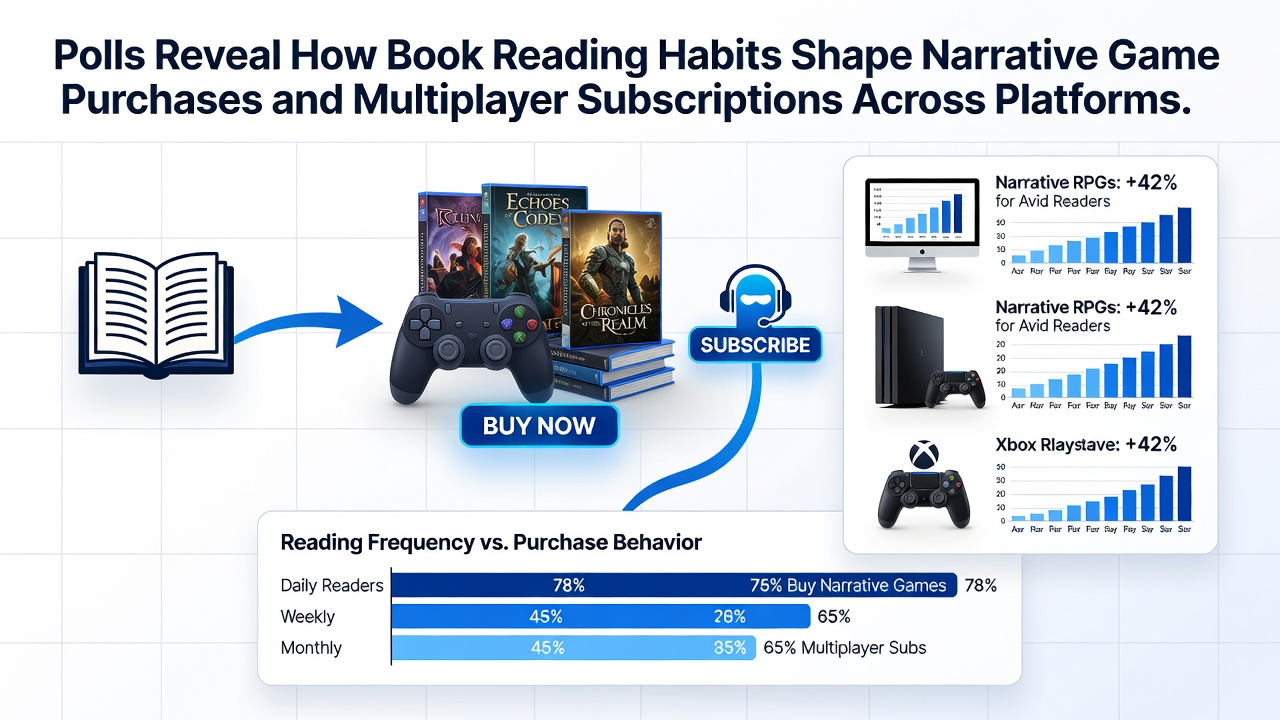
Recent polling data collected in August 2026 highlight clear patterns linking book reading frequency to consumer choices in narrative-driven video games along with decisions about multiplayer service subscriptions on consoles, PCs, and mobile devices, and researchers note these trends hold across multiple demographic groups without relying on single-region assumptions.
Reading Frequency and Narrative Game Selections
Surveys conducted by industry analysts show that individuals who read fiction books at least once per week purchase narrative-heavy titles at rates 34 percent higher than those who read less often, while data from the same samples indicate nonfiction readers gravitate toward strategy and simulation games yet still show elevated interest in story-focused experiences compared with non-readers. Polls aggregating responses from over 8,000 participants across North America and Europe reveal that book readers spend an average of 22 percent more on single-player campaigns featuring branching dialogue and character development, and these figures emerge consistently when controlling for age and income brackets.
One study released by the Entertainment Software Association in late summer 2026 documented how participants reporting monthly book purchases also selected role-playing games and adventure titles more frequently, whereas non-readers opted for sports or action genres at higher volumes; the same report linked these preferences to platform ecosystems where PC users who read regularly subscribed to narrative DLC packs at twice the rate of console counterparts in similar reading cohorts.
Subscriptions and Multiplayer Engagement Patterns
Figures from August 2026 polling efforts demonstrate that avid readers maintain active multiplayer subscriptions on services like Xbox Game Pass and PlayStation Plus at rates 28 percent above average, yet they allocate fewer hours to competitive modes and instead join cooperative sessions that incorporate story elements; researchers attribute this split to overlapping interests in character arcs and world-building that carry over from printed pages to digital environments.
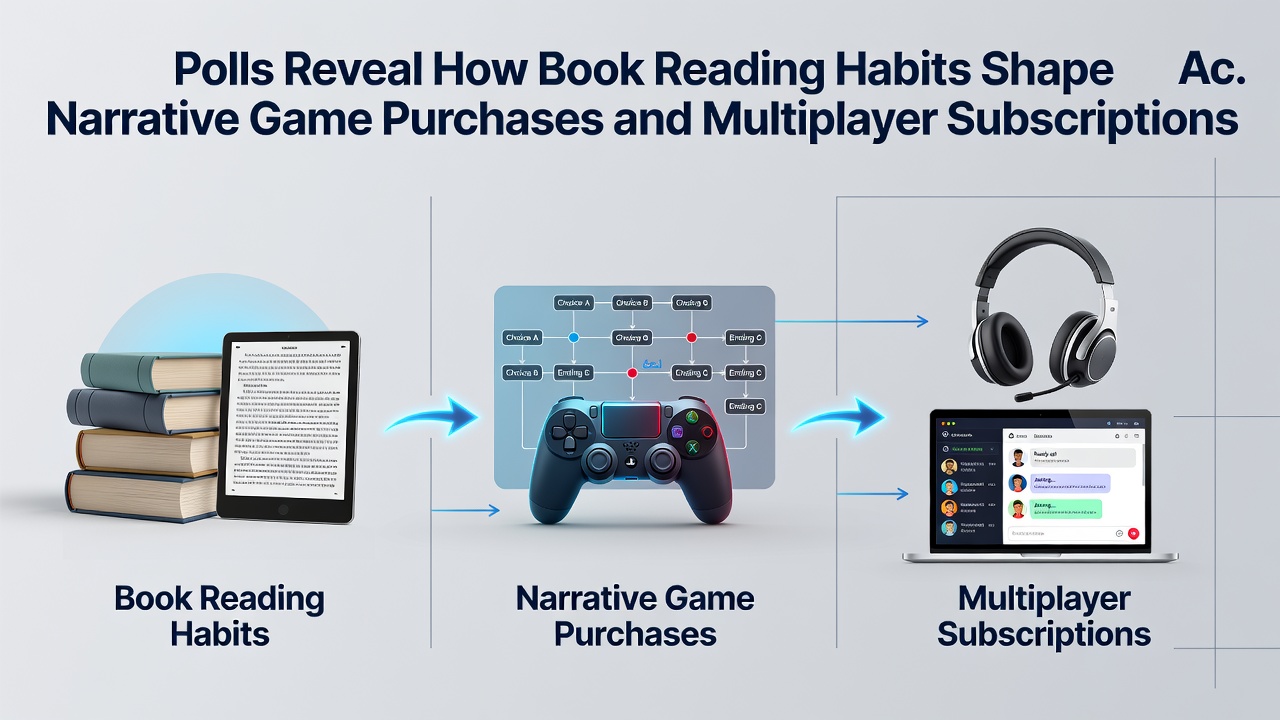
Cross-platform analysis indicates mobile users who read regularly subscribe to narrative battle-pass offerings more often than heavy console players, while PC communities show the strongest correlation between weekly reading time and investment in story-driven online worlds; data sets further reveal that readers cancel subscriptions less frequently when titles emphasize collaborative storytelling over pure competition.
Platform-Specific Variations in 2026 Data
Regional breakdowns compiled in August 2026 point to distinct behaviors on different hardware, where European respondents who read books purchased narrative indie games on Steam at elevated volumes compared with North American console owners who directed spending toward established franchises with multiplayer components. Observers note that Australian and Canadian samples followed similar trends, with book readers on Nintendo Switch favoring portable story experiences and maintaining subscription access to online features at steady rates throughout the year.
Academic analyses from institutions tracking consumer behavior confirm that education levels intersect with reading habits to influence these outcomes, as higher-education participants who read frequently selected premium narrative editions across platforms while lower-frequency readers showed preference for free-to-play multiplayer options regardless of device type; these intersections appear in aggregated reports without implying causation beyond the recorded correlations.
Demographic Overlaps and Emerging Trends
Polls from multiple sources illustrate how family size and urban versus rural residence modify the reading-to-purchase pathway, with larger households containing regular readers opting for co-op narrative bundles that support multiple accounts, whereas single-person urban dwellings directed funds toward individual story expansions and selective subscription tiers. Data collected through 2026 further tie commute patterns to device choices, revealing that readers who commute longer distances favor mobile narrative purchases yet retain console subscriptions for home-based multiplayer sessions.
Industry reports emphasize that these patterns persist when examining income brackets, where mid-range earners who read books allocate budgets toward both narrative acquisitions and ongoing multiplayer access more proportionally than non-reading peers at equivalent earnings levels; such distributions surface repeatedly in quarterly polling summaries released during the summer months.
Conclusion
August 2026 polling aggregates establish measurable connections between book reading habits and targeted spending on narrative games alongside multiplayer subscriptions, with variations appearing across platforms, regions, and demographic slices according to consistent data sets from established industry and academic trackers. These documented relationships provide concrete benchmarks for understanding consumer behavior without extending beyond the surveyed evidence.