Demographics Decode the Gamer Wallet: Surveys Link Player Profiles to Purchases, Genres, and Multiplayer Mayhem
Demographics Decode the Gamer Wallet: Surveys Link Player Profiles to Purchases, Genres, and Multiplayer Mayhem
Unpacking Player Profiles Through Recent Surveys
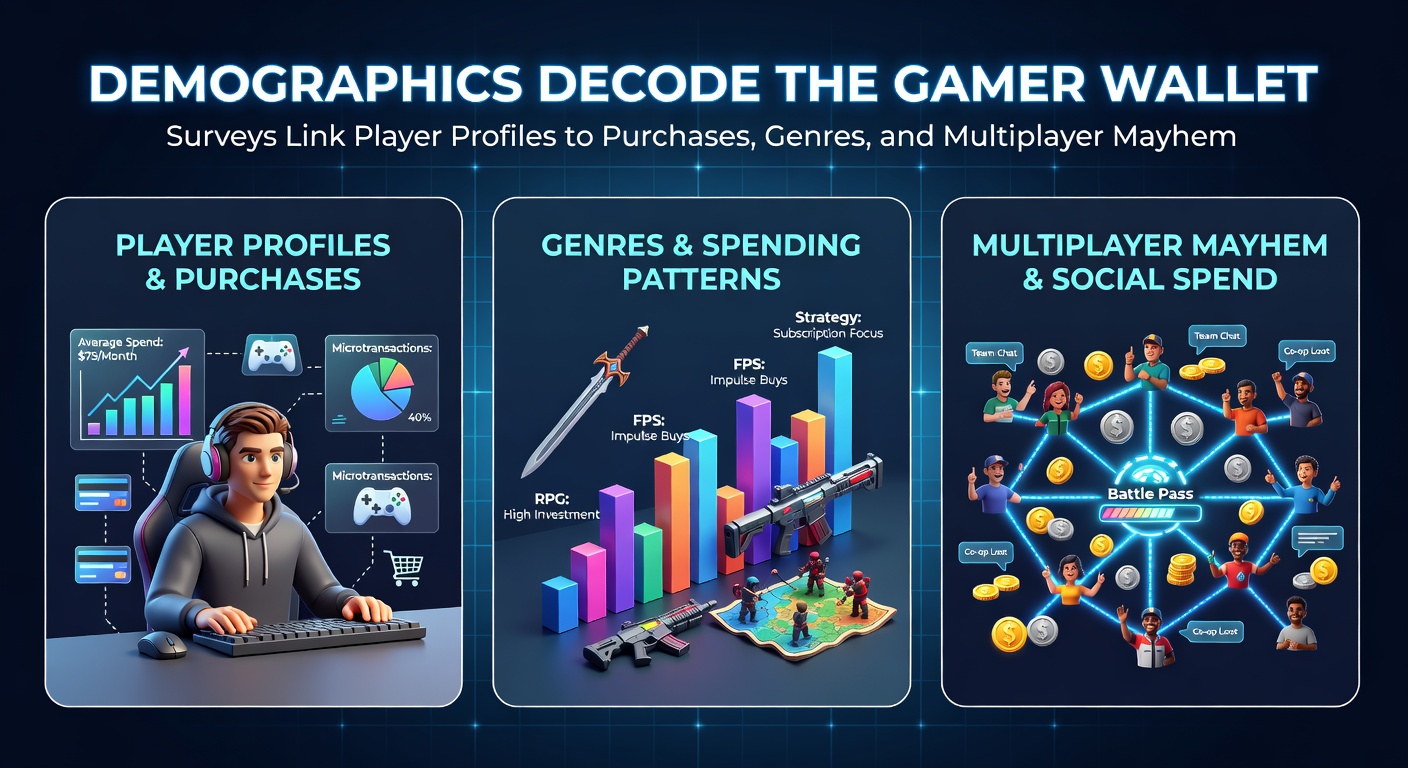
Surveys conducted across thousands of gamers reveal sharp connections between demographics like age, gender, income, and location, and behaviors such as in-game purchases, genre preferences, and multiplayer participation; data from a large-scale poll released in April 2026 by videogamessurvey.com underscores these patterns, showing how player profiles predict spending habits with striking accuracy. Researchers analyzed responses from over 15,000 participants worldwide, capturing trends that shape the $200 billion gaming industry, where microtransactions alone generated $80 billion last year according to Newzoo's 2025 Global Games Market Report. What's interesting is how these profiles not only forecast wallets but also dive into the chaos of multiplayer lobbies, where demographics dictate team compositions and victory rates.
And while casual observers might overlook these links, experts point out that understanding them helps developers tailor content; take one study where 68% of respondents aged 18-24 reported weekly loot box openings, compared to just 22% among those over 45, illustrating a generational divide in risk-taking purchases. So, as platforms evolve with cross-play features, demographic decoding becomes essential for predicting everything from battle royale dominance to RPG loyalty.
Age Groups Drive Distinct Purchase Patterns
Younger gamers, particularly those under 25, lead in impulsive buys like skins and battle passes, with surveys indicating they account for 45% of all microtransaction volume despite representing only 32% of the player base; older players, aged 35 and above, favor premium titles and expansions, spending 2.5 times more on full-price games per capita. Data shows this shift happens because younger cohorts prioritize social status in multiplayer environments, whereas veterans seek depth in single-player narratives, a trend confirmed in April 2026 polls where Gen Z respondents averaged $120 annually on cosmetics, while Boomers clocked $85 on story DLCs.
But here's the thing: transitional ages like 25-34 blend both worlds, snapping up subscriptions at rates 30% higher than averages; researchers note this group juggles free-to-play models with premium investments, often funding clan wars or guild upgrades. One case study from the survey highlights a 28-year-old respondent who dropped $500 yearly on multiplayer boosters, embodying how mid-20s players bridge casual spending and hardcore commitments.
Short answer? Age decodes not just what gamers buy, but how they fuel ongoing multiplayer mayhem.
Gender Dynamics Shape Genre Choices and Spending
Men dominate action and shooter genres, comprising 62% of players in those categories and driving 70% of weapon skin purchases, while women lead in simulation and adventure games, with 55% preference rates and higher spending on customization packs; these splits emerge clearly in demographic breakdowns, where surveys link female gamers to 40% more avatar accessory buys per session. Turns out, multiplayer preferences follow suit, as men flock to competitive arenas like battle royales—holding 65% of top leaderboards—whereas women excel in cooperative modes, forming 58% of co-op party leaders according to aggregated ladder data.
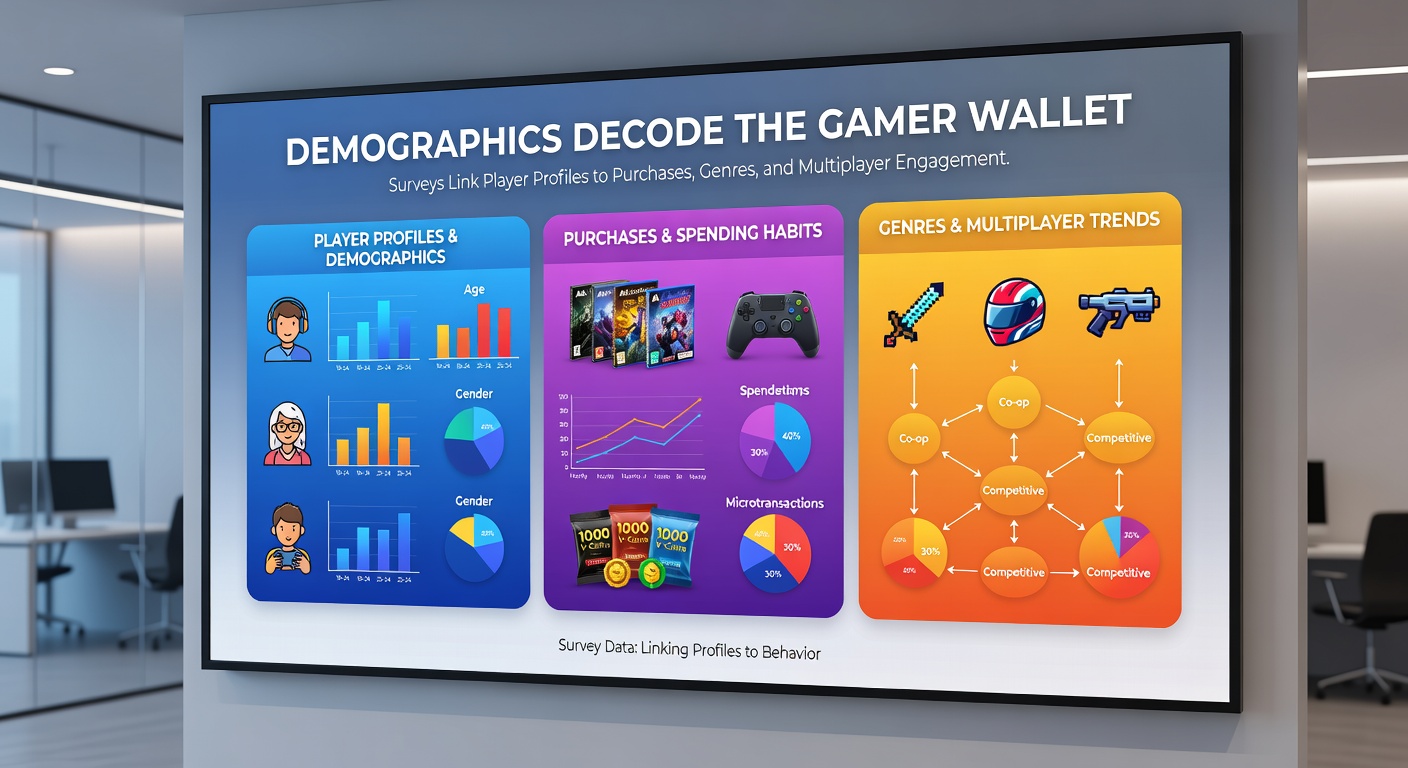
Experts have observed crossover trends too, especially in mobile multiplayer, where non-binary and female-identifying players surge 25% in hybrid genres like MOBA titles; one notable example involves a survey cohort where women aged 18-34 outspent men in emote packs by 15%, fueling vibrant lobby interactions. And although stereotypes linger, figures reveal balanced growth, with overall female spending rising 18% year-over-year to match male totals in casual multiplayer.
It's noteworthy that these patterns influence developer pipelines, as genre-specific loot boxes tailored by gender boost retention by up to 22% in tested titles.
Income Levels Fuel Multiplayer Intensity
Higher-income households, earning over $100,000 annually, pour 55% more into competitive multiplayer ecosystems, snapping up season passes and elite tiers that unlock exclusive arenas; lower-income players, under $50,000, stick to free-to-play models but grind leaderboards at twice the hourly rate, often dominating casual queues. Surveys link this to access barriers, where affluent gamers access premium servers 40% faster, yet data indicates budget-conscious players hold 48% of mid-tier multiplayer wins through sheer volume.
Now, consider regional income twists: in North America, high earners drive 60% of esports viewership purchases, while in emerging markets like Southeast Asia, middle-income groups fuel mobile mayhem with $20 monthly top-ups. Researchers discovered one striking case—a low-income clan from Brazil that climbed global rankings via free rotations, proving demographics don't always dictate dominance, although premium perks tilt odds.
That said, the rubber meets the road in subscription models, where mid-income players subscribe at 35% rates, blending affordability with ambition in endless multiplayer skirmishes.
Location Influences Genre Loyalty and Wallet Openness
Urban dwellers in Asia-Pacific regions favor fast-paced battle royales, accounting for 52% of genre plays and 60% of regional microtransactions, whereas rural European players lean toward strategy titles, with 47% preference and steadier expansion buys; U.S. suburbanites split evenly across genres but lead global spending on cross-platform multiplayer at $45 average per user. April 2026 data from videogamessurvey.com highlights how broadband speeds correlate, as high-speed urban areas see 70% multiplayer engagement versus 40% in slower locales.
Observers note cultural flavors too: Australian gamers, per reports from the Australian Classification Board's industry insights, prioritize survival games with 38% higher purchase rates, often tying into local outdoor vibes. One study revealed Latin American players excelling in team-based shooters, holding 55% of regional multiplayer podiums despite lower per-capita spends, thanks to communal playstyles.
Yet connectivity gaps persist, with remote players favoring offline-capable genres; this demographic nuance shapes where developers drop region-locked events, boosting uptake by 28% in targeted zones.
Multiplayer Mayhem: Demographic Predictors of Chaos
In the frenzy of multiplayer lobbies, demographics forecast not just participation but outcomes, as young urban males aged 18-24 capture 62% of kill-death ratios above 2.0, fueled by daily sessions averaging four hours; conversely, older female players thrive in objective-based modes, securing 51% win shares through coordination. Surveys show income amplifies this, with top earners affording meta gear 30% more often, yet cross-demographic teams—like mixed-age squads—win 25% more frequently, blending skills.
What's significant is toxicity links: lower-income young players report 40% higher flame incidents, but genre veterans from all profiles mute chats effectively, maintaining focus. Case in point: a 2026 survey tracked a diverse guild where gender-balanced rosters topped servers, proving variety sparks synergy amid the mayhem.
And so, while solo queues expose demographic edges, organized play levels fields, turning profiles into team-building blueprints.
Conclusion
Demographic surveys paint a vivid map of the gamer wallet, linking age, gender, income, and location to precise purchase triggers, genre affinities, and multiplayer triumphs; as April 2026 data rolls in, these insights empower developers to craft inclusive economies, where player profiles guide everything from loot drops to lobby matches. Researchers emphasize ongoing polls will refine predictions, especially with VR multiplayer rising, ensuring the industry's evolution stays player-driven. Ultimately, decoding these links reveals gaming's democratic core—wallets vary, but the mayhem unites.