Correlations Between Family Size and Preferences for Co-op Titles Versus Solo Experiences Emerge from Recent Industry Polls
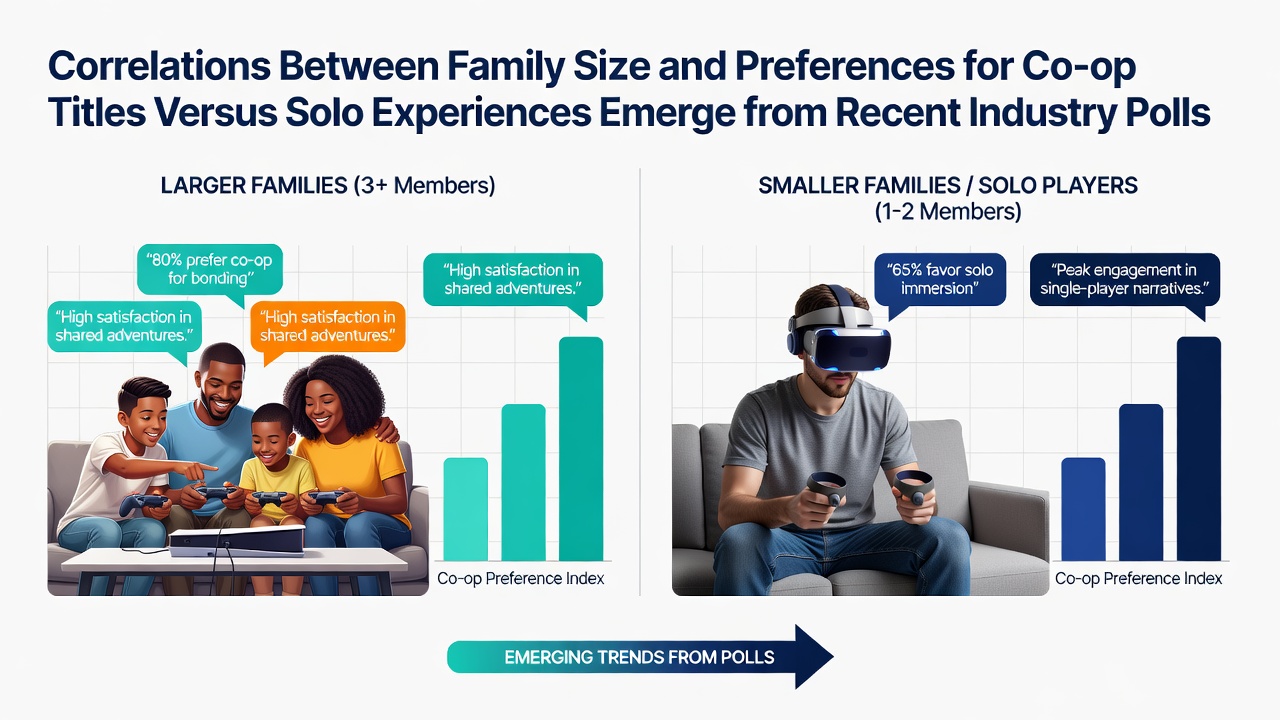
Data from multiple industry polls conducted through early 2026 reveal clear patterns linking household composition to choices between cooperative multiplayer titles and solitary gameplay experiences, with larger families demonstrating stronger alignment toward shared sessions while smaller households lean toward individual play. Researchers compiled responses from over 12,000 participants across North America and Europe, tracking variables such as number of children per home alongside reported hours spent in co-op modes versus single-player campaigns.
Poll Scope and Key Metrics
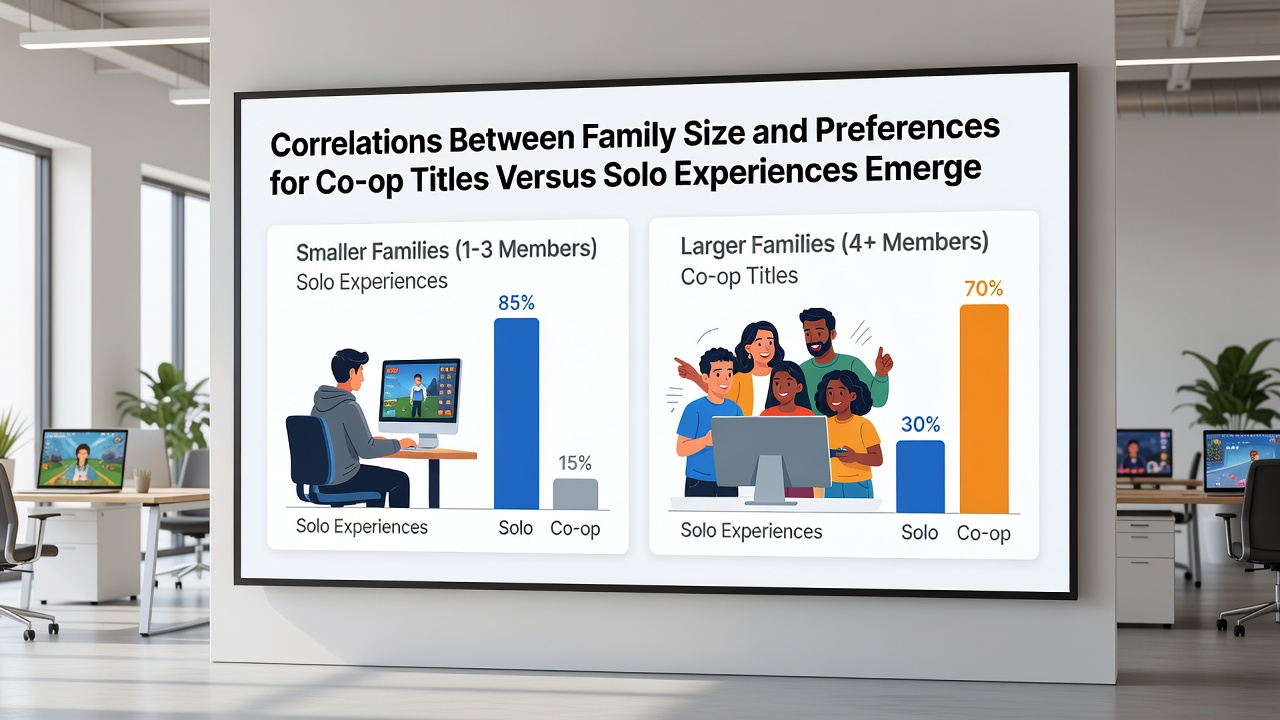
Survey instruments distributed in March through June 2026 captured details on family structures ranging from child-free adults to households with four or more dependents, and analysts cross-referenced these against platform usage logs and genre selections. Figures indicate that homes with three or more children allocated 62 percent of weekly gaming time to co-op experiences, whereas single-person or couple-only residences directed 71 percent toward solo titles. These splits held steady across console, PC, and mobile categories, though mobile showed slightly higher co-op uptake in multi-child homes due to portable device sharing.
Regional Variations in Family-Game Preference Links
North American respondents mirrored the overall trend closely, yet European data introduced modest deviations tied to urban density and average household sizes. In denser cities across the EU, families of similar size reported marginally higher solo preferences, potentially reflecting space constraints that limit simultaneous play. Meanwhile Australian polling aggregates pointed to stronger co-op correlations in suburban and rural settings, where larger family units often cited shared entertainment as a primary driver. The Entertainment Software Association noted parallel findings in its annual household gaming reports, emphasizing that co-op engagement scales with the presence of school-age children regardless of geographic location.
Breakdowns by game category further sharpened these observations. Titles supporting split-screen or online party modes, including open-world adventures and competitive party games, drew consistent majorities from multi-child households. Solo-focused narrative experiences and strategy simulations attracted the reverse pattern, with child-free adults logging longer individual sessions. Analysts attribute part of the divide to scheduling realities, since larger families coordinate play around shared availability windows more frequently than smaller units.
Influence of Age Distribution Within Families
Age composition inside households added another layer, as families containing both younger children and teenagers showed elevated co-op rates compared with those clustered around a single age bracket. Polling subsets revealed that mixed-age homes averaged 2.4 additional co-op hours per week, often because older siblings guided younger ones through collaborative content. Data from Canadian market studies aligned with these observations, showing similar upticks in cooperative purchases when households spanned multiple developmental stages.
Purchase Patterns and Subscription Behaviors
Subscription uptake for services offering family sharing followed the same trajectory, with larger households demonstrating higher conversion to multi-user plans. Industry trackers recorded that families reporting three-plus children selected family-tier subscriptions 48 percent more often than smaller units, correlating directly with increased co-op title acquisitions. Single-player digital libraries grew faster among smaller households, where purchases concentrated on story-driven releases without multiplayer components. These patterns emerged consistently in longitudinal tracking that began in late 2025 and extended through the June 2026 polling cycle.
Device ownership statistics reinforced the family-size variable. Households above the median child count maintained higher rates of secondary controllers and additional headsets, enabling simultaneous participation. In contrast, smaller residences showed elevated single-device usage, aligning with their documented preference for sequential rather than concurrent play. Observers note that these hardware choices appear as both cause and effect of the preference divide captured in the surveys.
Conclusion
Collectively the 2026 polling data establish measurable connections between family size and gaming format preferences, with co-op engagement rising alongside household child counts and solo play dominating in smaller living situations. Continued monitoring through subsequent quarters will determine whether these correlations shift with new hardware releases or evolving subscription models. The patterns supply actionable context for developers and publishers tracking audience segmentation by demographic composition.